
Budgeting Tips for SASSA Grant Recipients in South Africa
Budgeting Tips for SASSA Grant Recipients in South Africa
Living on a fixed income from the South African Social Security Agency (SASSA) can feel stressful, especially as the cost of food, electricity, transport, and school supplies continues to increase. When your household depends entirely on grant payments, there are a few mistakes that must happen.
Without a clear and realistic spending plan, money can disappear within days of receiving it, leaving families struggling before the next payment date arrives. This guide covers all budgeting tips that help you to manage your grant payment.
Why Budgeting Is Essential When Living on a SASSA Grant
However, budgeting is not just about stretching one’s funds; it is also about establishing financial stability, especially when one has limited and uncertain income. When one is receiving funds from the South African Social Security Agency, the payment cycle is always the same.
Without a structured plan, spending decisions are often made on emotion or urgency rather than strategy, which can weaken long-term household security. In most instances, families depend on such grants as the Child Support Grant or the Social Relief of Distress (SRD) to survive.
Budgeting Tips for SASSA Grant Recipients
To successfully manage a SASSA grant, one needs to have discipline and planning. The goal is not perfection; it is consistency. When income is limited, small financial decisions have a big impact on the month. The following practical steps can help stretch your grant further and reduce financial stress.
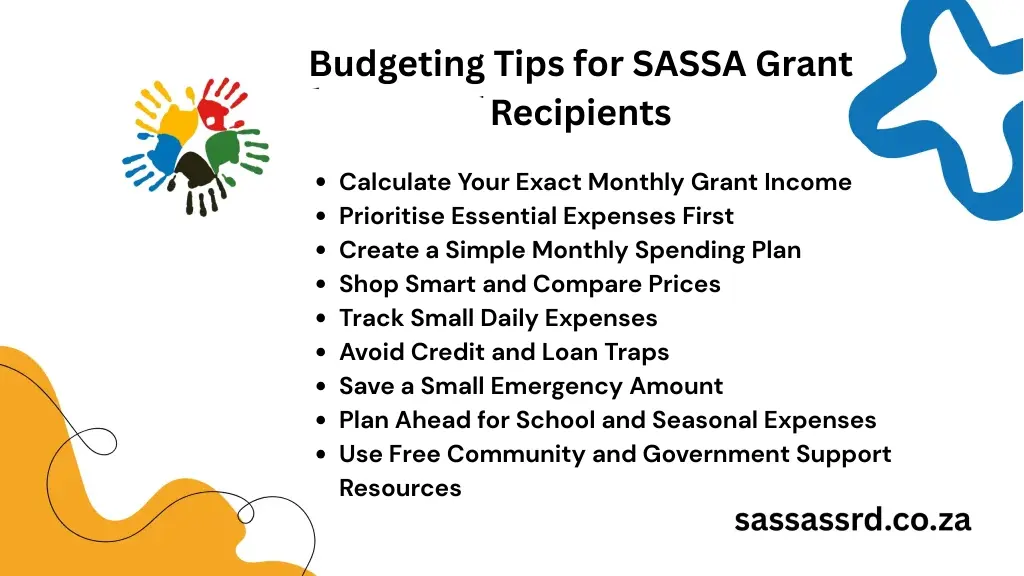
Calculate Your Exact Monthly Grant Income
To begin with, you need to know the amount you and your family are receiving from SASSA. If you’re receiving more than one grant, like the Child Support Grant, the Older Persons Grant, the Disability Grant, or the Social Relief of Distress, you will need to add them together to know your full income.
It’s very important to know how much you’re receiving before you start to spend it to avoid confusion and overspending at the beginning of the month.
Prioritise Essential Expenses First
Before buying non-essentials, cover the basics that keep your household stable. Essentials may include:
- Food and basic groceries
- Electricity and water
- Transport to and from work, school, or medical appointments
- School essentials like stationery or fees
By paying these first, you can minimize the possibility of emergencies towards the end of the month.
Create a Simple Monthly Spending Plan
Once you know your total income, divide it into manageable portions.
- Break your income into smaller weekly amounts instead of spending all of it at once.
- Set limits for each type of spending, such as food, transport, and electricity.
This structure helps your money last until the next payment date and reduces the temptation to overspend immediately after receiving your grant.
Shop Smart and Compare Prices
Smart shopping can make a significant difference over time.
- If the quantity is larger and the price per unit is lower and affordable, purchase the staple food items in larger quantities.
- Compare the supermarket specials before making purchases.
- Avoid impulse purchases that were not part of the original plan.
Meal planning may also save you from making unnecessary trips to the store and may reduce food wastage.
Track Small Daily Expenses
Small daily expenses may not be noticed, and they may accumulate quickly.
- You should track your expenses on taxi fare, airtime top-up, snacks, and trips to the small shop.
- Look at your weekly expenses and identify areas where money is leaking away.
Being aware of your minor expenses gives you better control and shows you the areas where you may cut down without compromising the essentials.
Avoid Credit and Loan Traps
When money runs short, borrowing may seem like a quick solution. However, informal lenders (mashonisas) and high-interest loans can trap you in a repayment cycle.
- High interest reduces the amount available from your next grant.
- Repeated borrowing can create long-term financial pressure.
Avoiding unnecessary debt protects your future income and keeps your household more stable.
Save a Small Emergency Amount
Even saving a small amount weekly can make a difference. It does not have to be large to be helpful.
- Put aside a small portion each week if possible.
- Use it for unexpected medical costs, transport emergencies, or urgent school needs.
Having an emergency buffer minimizes the use of loans during such financial shocks.
Plan for School and Seasonal Expenses
There are expenses that we incur every year, and it is good to plan for them.
- School uniforms and stationery
- Examination expenses
- Winter clothes and blankets
- December holiday expenses
All these expenses should be planned for in advance to avoid financial strain during peak expense periods.
Use Free Community and Government Support Resources
You do not have to manage alone. Many communities offer additional support.
- School nutrition programmes can reduce food costs.
- Community food initiatives and faith-based groups may assist.
- Local NGOs often support vulnerable households.
Using available resources responsibly can ease pressure on your grant and help your household remain financially stable.
Common Budgeting Mistakes SASSA Grant Recipients Should Avoid
When receiving support from the South African Social Security Agency, certain habits can quickly damage your monthly budget. Spending a large amount immediately after payment day often leaves too little for the remaining weeks, especially when purchases are emotional or unplanned.
Lending money you cannot afford to lose may also create pressure if it is not repaid, putting your own essentials at risk. Additionally, relying on high-interest loans or informal lenders reduces your future grant income and can trap you in a cycle of debt that becomes difficult to escape.
FAQs
Conclusion
In order to manage your tight SASSA grant, you need to plan your spending before payment day. You need to look at your daily spending and avoid emotional buying after receiving your grant.